
You Are Not OCD
OCD Is An Impostor
That might sound like a strange way to describe a brain-based mental health disorder. After all, obsessive-compulsive disorder isn't a separate personality or a dark force from the outside. It develops because of the way a person’s brain processes threat and uncertainty. Yet impostor is still one of the best words I know for describing OCD.
Here's how the deception works. OCD speaks in your own voice. As psychologist and OCD expert Dr. Reid Wilson puts it, OCD is “a mental health disorder masquerading as your own thoughts.” Many people don't even realize they're battling with OCD; they think they're battling against themselves. That's why impostor is such a fitting description.
OCD wraps itself around whatever is most important to you. It borrows your deepest values and your greatest fears. For Christians, that often means faith itself becomes the target. This form of OCD is called scrupulosity OCD and it can affect even the most devoted and earnest believers.
OCD Is Not a Reflection of Who You Are
The OCD cycle begins with unwanted and intrusive thoughts that can be very distressing. For Christians, this might include troubling doubts and questions, disturbing images or blasphemous statements that shock or even horrify you. This can be agonizing and make you question your character, your love for God or the genuineness of your faith. You may ask yourself if a true follower of Jesus could ever have thoughts like these.
It's very important to understand that the thoughts experienced by the OCD sufferer are ego-dystonic. That's clinical language for something simple: these thoughts can, and most often do, directly contradict your actual beliefs, values, desires and intentions. A person can love and believe in Jesus and also have obsessive and intrusive thoughts. The distressing thoughts of OCD don't reveal the true state of your heart. Instead, they reveal what you most fear or dread.
Your Danger Alarm Is Stuck on High
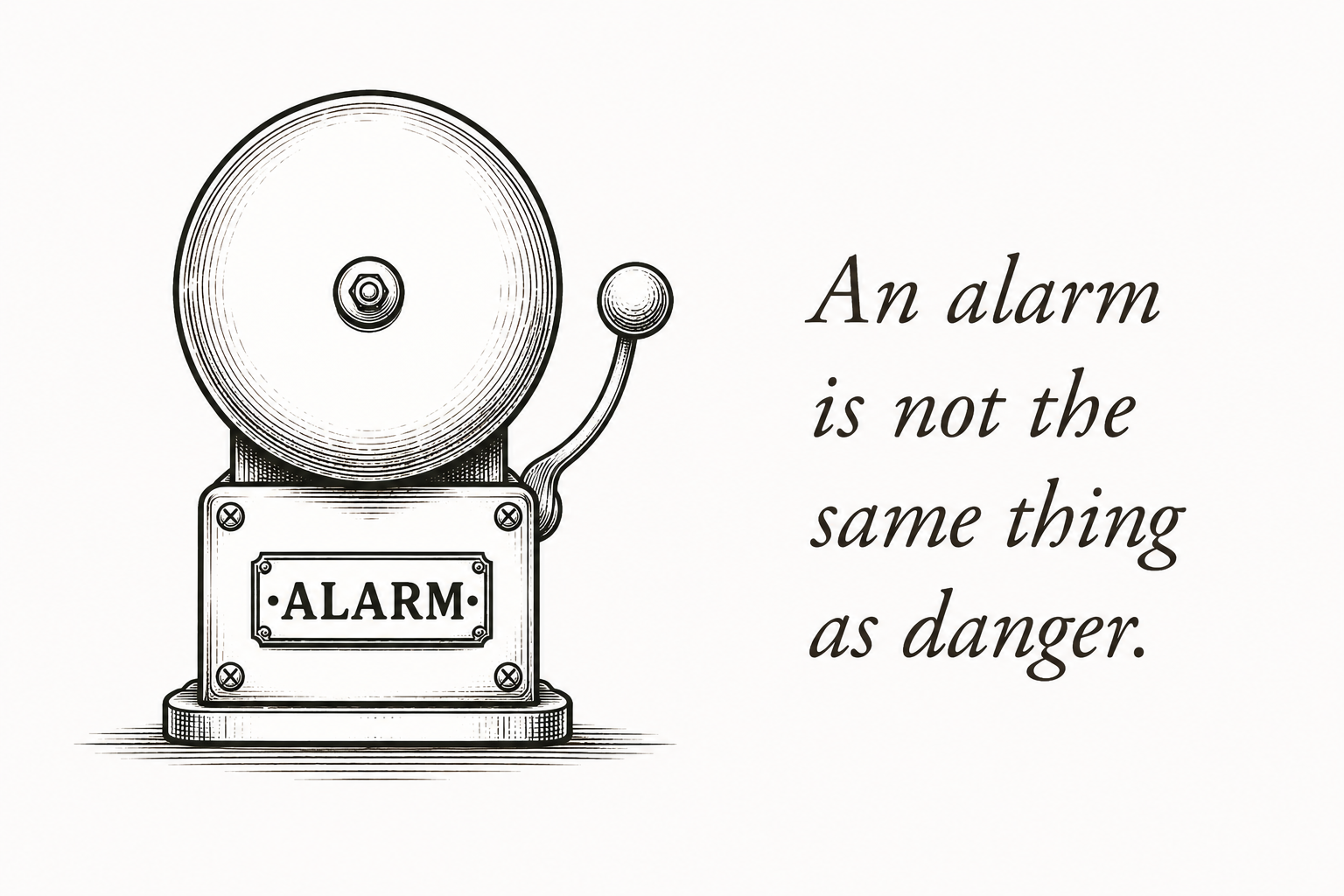
In OCD, the brain's threat and error detection systems function differently. God designed us with a nervous system to alert us to danger and a conscience to alert us when we have done something wrong. In scrupulosity OCD, those two can become tangled. The brain's danger alarm becomes overactive, like a fire alarm that keeps going off when there is no fire. Because the alarm feels real, you naturally respond with urgency, believing that you are in trouble spiritually.
Scrupulosity OCD says:
You'd better figure this out now!
You must be absolutely certain you are getting it right.
Maybe one more prayer or one more confession.
Maybe one more Scripture passage or sermon or video.
Maybe one more apologetic argument or just a bit more research.
Maybe one more person with just the right reassuring words.
Maybe one more act of evangelism or service or self-sacrifice.
You can fix this...if you just try a little harder.
We call these attempts to extinguish the fire safety behaviors, or compulsions. Unfortunately, instead of quieting the alarm, giving in to compulsions teaches your brain that the danger must have been real, making it more likely to sound the alarm again and again. This sets up a vicious cycle: obsessive thoughts lead to compulsive behaviors and compulsive behaviors reinforce the obsessive thoughts. It's like a car spinning its wheels and sinking deeper and deeper into the mud. But the reality is that you aren't stuck. There is a way out!
You Can Learn to Recognize the Impostor
The journey toward freedom begins when you say: “That's OCD talking. That isn't the core of who I am and it doesn't have to control me. I can say no to its endless demands.” You aren't pretending the anxiety isn't real. You're learning that an alarm is not the same thing as danger. Once you understand that key truth, you can begin learning practical strategies to push back against the disorder.
It's important to recognize that you don't need perfect understanding or flawless faith before you can trust God. You don't have to give your intrusive thoughts power over you by believing them, arguing with them or trying to make them stop. Instead, you can begin responding differently to OCD. Rather than chasing certainty, you can learn to rest in something rock solid and unshakable: God's love and faithfulness, even in the midst of struggle and uncertainty.
OCD wants fear to rule. It wants urgency to rule. It wants the endless, unanswerable questions to rule. But those voices do not have to determine how you live. In Colossians 3:15, the apostle Paul writes, "Let the peace of Christ rule in your hearts."
Learning to respond differently to OCD isn't something you have to do alone. A Christian therapist or mental health coach with training in scrupulosity OCD can help you understand what is happening in your brain and teach you practical tools to push back against OCD, while encouraging you in your faith.
One Thing To Remember
You are not OCD. Your intrusive thoughts are not a revelation of your character, your relationship with Jesus, or the true condition of your heart. The goal isn't to finally answer every question OCD asks, but to learn that you don't have to. With God's help and with Christian mental health support, you can begin to break the cycle of OCD and walk in freedom rather than fear!